
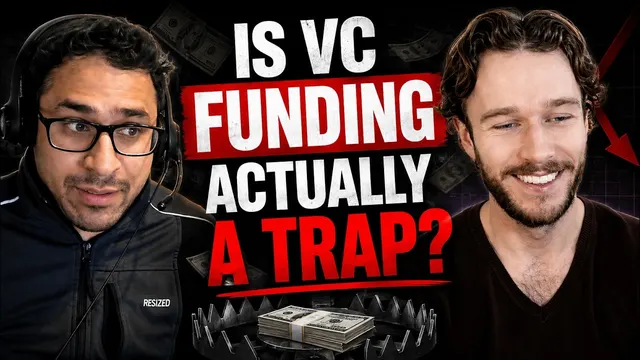
 ▶ Watch on YouTube
 YouTube
 Spotify
 Apple Podcasts
On YouTube this episode is called “Is VC Funding Actually a Trap?”.
What it’s about
Ajinkya, who goes by AJ, is a co-founder of Trellus, an embedded power and parallel dialer that works inside tools like HubSpot, Outreach and Salesloft. He talks Tom through how Trellus got started and how sales tech has changed.
Most of the conversation is about the decision not to take VC money: what AJ calls the VC treadmill, why he thinks staying lean works in sales tech, and why optionality can work against a company. They also cover cold calling, whether outbound automation still works, AI SDRs, how sales teams spend their budget, and how Trellus does its own distribution through Chrome extensions, product-led growth, content and SEO.
Guest: Ajinkya (AJ), co-founder at Trellus
Topics: AI SDRs and automation, Outbound and cold outreach
Chapters
- 0:00Intro: meet AJ, co-founder of Trellus
- 1:01Building without a blueprint: the idea maze
- 2:22Trellus’s first product and what it taught them
- 3:35Spotting the market gap: embedded vs standalone dialers
- 5:28Why you should never raise VC in sales tech
- 7:01The VC treadmill: why there’s no way back
- 9:04Cold calling’s comeback and what it means
- 10:00The cold email paradox: less efficacy, more spend
- 12:00AI SDRs: hated on LinkedIn, winning in revenue
- 14:19The 6 ways sales orgs spend money
- 17:24AI is cutting engineering costs, and sales gets the budget
- 20:46Trellus GTM: Chrome extensions, PLG and content
- 22:38The founder’s trap: optionality is not your friend
- 23:31Why bootstrapping in the AI era has never been easier
- 28:11Distribution: SEO, Reddit and playing the long game
- 32:56Cold outreach: the honest truth from a dialer company
- 36:40Hot take: LinkedIn GTM advice will lead you astray
Transcript
Auto-generated transcript, made from YouTube’s automatic captions. Filler words are removed and a couple of misheard company names are corrected, but it hasn’t been checked word for word and speakers aren’t labelled (each paragraph is roughly one person speaking). Check the video before quoting anyone.
Read the transcript (about 9100 words)
Intro: meet AJ, co-founder of Trellus
0:01Jinka, how's it going? Welcome to the show. It's really great to have you on.
0:05Hey, Tom, it's going well. Yeah, no, excited to be here and it's been a pleasure working with you guys over the the past couple months.
0:11Absolutely, man. Awesome. So, let's dive in. Give us an idea of who you are, what you do, and what that looks like.
0:19For sure. Yeah. So, by way of intro, name is Jenia. I usually go by AJ with folks. One of the founders here at Trellus. We've been around for a little over four years now, which feels crazy, but that's that's what we are. We are in the sales tech space. So we specifically do a bunch of stuff around dialing. So we are an embedded power and parallel dialer. So if you're familiar with like Nooks, ORM, those class of tools, we essentially build similar products, but we do them inside your platform. So that's sort of the the big difference that we do. We're a lean team, so we've decided to not go the VC approach.
For doing just the the cash flow you know basis and yeah it's been a pretty exciting
Building without a blueprint: the idea maze
1:02Awesome man. I mean look you know we've been using the product itself for a couple of months now maybe a bit longer. I have to say I absolutely love it. First of all I think you guys have done a fantastic job of building a tool that is really designed for reps and with reps in mind. I think that is that's fantastic. You know I've used a bunch of tools previously. But I'd love to know a little bit more about the journey itself. You know you're in a space that is you know there's big players out there you know Nooks Orum there's you know in pipeline dialers and things like that so you know sort of what led you to the point of thinking we need to do this ourselves and give us an idea of what that starting the starting the journey looked like
1:41Yeah so I think there's a a couple parts of it so actually starting the journey is like we had no intention of building a dialer or building it sales tech like me and my co-founder were engineers by training we just knew that We wanted to start a company. That was the background of it. So, it was start company first, come up with idea later. And then we we ran through the idea maze for I don't even know how long it was. It was a torturous eight months. That's the way I would put it. And then at some point, someone on LinkedIn was like cold calling is making a comeback.
And we're like, I had never even, you know, gotten a cold call or like done a cold call in my life at this point. And so, just total blinders on. Let's see what we can do. Charles actually started off as a real-time AI coach for cold calls. Okay.
Trellus’s first product and what it taught them
2:25It was a bit of a tarpet idea. It I think it now works because like the new LLMs and everything make it work, but at the time honestly it was just too a little too early. But it gave us users. So, we were able to get like the first hundred people who were using Trollus honestly not for the coaching but for the like the free call transcripts that we gave them on the calls. And I think like basically the number one lesson I learned from that experience is
2:52Even if you have the dumbest product in the world, if that product can get users to go use the product for whatever, like for some orthogonal value that you have no intention of like actually being the core use of your product, you should just go do that thing because you will probably find out what the actual like problem they're having is. And you have no way to know that unless you like give them you kind of like are in their ecosystem. And so that was probably the first year and a half was like let's embed ourselves. Let's get like a couple hundred users like figure out what is going on.
3:22I think quickly you get a you know if it's not like you're you have agency like you can go and like look at what other companies are doing. You can like like literally watch people's like dayto-day and so you get a sense of like how the market's evolving. I think we saw two big trends. Like one, there was a lot of specialized dialers coming out, right? The Nooks and the Orums of the world, which are like more of these like nextgen dialers. And then a lot of the sales engagement platforms were not keeping up with them. So like Outreach, Salesoft, you know, obviously HubSpot, like they just don't have these like these like hundreds of features that you come to expect with new dialers that you know when you go from like a Nook to just dialing inside of Outreach, you're like, "Oh, I'm like I've gone to like B like riding a horse from like a Lamborghini or something like that." And so our suspicion was like there is two two parts of this equation here.
One is what if we can build all of those capabilities but bring it to your outreach because then you don't have to leave outreach and then we can make the sales pitch to everyone that hey you've you know spent like a4 million dollars on outreach and now you're going to like spend $100,000 on your dialer to leave outreach. That sounds like a great idea. Someone's going to get fired over that because like that's an insane like proposition you just made to your boss. Let's spend a hund let's spend hundreds of thousands on this tool that we're never going to be in now all of a sudden like the sales motion.
And so that was the the impetus for it. I think like every business decision has trade-offs, right? Like we have a lot of platform risk, right? Like when you're a Nooks or ORM, you have your users inside of nooks.ai or or.com.
Spotting the market gap: embedded vs standalone dialers
4:52It is like a notoriously well-known thing. Like you cannot dial from trellis.com. Like it's not like a you like literally are incapable of dialing from our website. You for being a dialer, which is pretty weird. Like you have to use other platforms. Yeah. And so we eat a lot of platform risk because of that, right? Like what if one day, you know, you know, HubSpot releases the best parallel dialer in the world? Like we're sort of not going to work on that platform anymore. But like you you eat that risk with also the gain of like, all right, now we're the only one that works on HubSpot in like this way.
So yeah, I mean that's that's the background. I think I have a lot of thoughts on how this market's evolving now. I have like my big take is like you should never raise VC if you're building in dialers. Like I think it's a bad idea personally. And we can go into why but yeah I think the second one is if you don't raise a lot of VC you are in control of your destiny like you don't have to do certain types of revenue milestones right like when you raise the VC treadmill like ORM has and Nooks sort of have like you have to reach like a quarter mill like probably a a quarter billion dollars in revenue to like warrant being a good company in today's like funding environment.
And if you don't reach that number, like you're kind of like your equity is underwater. Like you can't hire engineers and you can't really transition to a cash flow company because private equity will buy you for like a 4x multiple and like no one makes money. You're underwater. Maybe the founders make money on that, but like no one else does. And so if you do the flip side, if you don't raise venture and you only get to say like 40 million in AR, everyone on your team is generationally wealthy and you're not as susceptible to market downturns cuz like a 5% draw down on 40 million of error is not that crazy, but like a 5% draw down on like 250 million of like you're panicking like the ships are sinking.
Like it's very hard to replace that revenue. And so like that's that's sort of like my thinking on the space, but I you know I'm obviously biased because I've chosen a direction, but that is you should always choose directions in life and then stick to it kind of thing.
Why you should never raise VC in sales tech
6:48So So when you chose that direction, was it was it was it conscious with what you've just explained to me in mind or was that something that you kind of learned through the process and realize, oh thank god I didn't go ahead and do
6:59Yeah, I think you learn it through it. I think anyone who has done this intentionally is probably a second time founder. And we're we're first- time founders, so we like just didn't know anything to be honest. And we're victims of circumstance. That's the way I would put it, which is like our company on the early days was not a hot company to invest in. And so, we didn't raise a lot of capital. So, like if you do raise a lot of capital, like you have a $6 million seed round, this is not a real possibility for you anymore. You are on the treadmill. Like, you can't just be like, "All right, guys, hands up.
We're going to become a cash flow company." Like, that's not a real option anymore. And so like you need to sort of be in this weird like dynamic state of like raising enough capital that you can get off the ground because like starting a dialer bootstrapped is an insane move. Like you're not going to do it. Like you're going to eat so much. You're probably lose hundreds of thousands of dollars of personal like net worth which
The VC treadmill: why there’s no way back
7:51I I don't know about you but I don't have that sort of cash sitting on me like to just go do that. And so like like like you do need some capital to start but you don't need that much capital to start. And so like you know obviously in retrospect I understand it now but like we were victims of circumstances the way I put And then the second part of the equation is like you actually have to go make money. Like most the notorious truth in Silicon Valley is like most companies don't make any money. Like they have a lot of users, a lot of product, but like they don't make money.
And it's like crazy to me that people are like getting into business and not making money. Like I get I get it when you're like going for the moon like you're building like a grand idea. Like you're building open AI or you're building like a nextgen robotics company. Like sure revenue you're like really working on like something fundamental that could like change society. But if you're working on like B2B SAS and you're like not making money and you're not thinking about how to and you're not thinking about how to make money, I'm like this is the dumbest thing you've like you're not changing the world with B2B Sass.
You're like crazy if you think you're doing that. And so I'm like I think people have lost the plot honestly when they like raise like crazy amounts of dollars for like a B2B SAS workflow product and I'm like you've literally lost the plot dude.
8:52The whole point is this going to be automated away with claude code in about two weeks.
8:56Yeah. I'm just like the whole point of this was like let's make money. Let's make a lot of money and like let's do it well and like I don't know. I think people have gone crazy and that's that's my worldview now.
Cold calling’s comeback and what it means
9:04So I think it's really interesting what you said regarding you know that it wasn't necessarily a hot product when you guys first first came out in in terms of raising PC
9:14Cuz I cuz I you know you guys have been around for since 22 is it is that
9:1822. So we started in 22 but like we actually only entered the sales tech space like really 23 January.
9:24Right. So it's interesting you say that because that's like prime outbound automation time you know when we've got mass cold email going out mass cold LinkedIn going out automated there. So but now that's kind of table stakes in organizations. So it means like the efficacy of that is going down. So it's almost like flipping flipping back where cold calling went from
9:44Being seen as outdated, not cool to now
9:48Being sort of necessary for an organization to grow, especially an organization that targets, you know, larger organ or organizations in itself in in their sales motion. So I mean is that something that you've noticed?
9:59Yeah, I think everything is a cycle, right? Like I suspect cold calling at some point will also have its cycle of going down and then coming back up, right? Like that that's my sort of two cents on it. I think when you're like a software infrastructure layer like you have to you basically can't make a bet that like this thing is going to go away because if it goes away you make no money. You have to make a bet that like two things are true. So I think some people have a misunderstanding of how the application layer makes money. So I'll let you take email for an example, right?
Which is even though email efficacy is going is getting worse, right? It's way harder to make cold email work. Smart lead and instantly make a ton more money than they did a year ago, right? And like I don't think people like really internalize that fact that like as email efficacy got worse, those companies made more money. And the reason for that is like the way most people in the market diverge in their thought, right? Like you're either going to become like an artisal go to market person, which is like you do very concentrated like tailored cold email to like 10 people, but it's but it's like perfect emails.
Or you're like just a mass machine of like a gajillion emails. In theory, everyone wants to be part one because like you know it feels good. It like feels like human. It feels like you're doing the right thing. But the thing people forget is for part one, you need like really good people to go and execute on that. Like you can't just you cannot do this at scale with like a 100 SDR team cuz like you know it's not to say that people are bad at their jobs, but like most people are not like excellent at their jobs to be honest. And like to find someone who will do that like 10 emails perfectly, just get them out to you.
Like you're you're going to have to pay that guy so much money and like it's not going to work if you're hiring a hundred of them. You can hire two of him and sure it will work for him. But like and this is like sort of what I get back at with like you know the some the stuff that's coming out in like the cold calling space is a good correlary where there's a divergence in the market happening between like the Titan X's of the world who are like all right let's do like 50 really focused calls and then you know not it works really great if you have good reps.
AI SDRs: hated on LinkedIn, winning in revenue
12:00But like you cannot afford the ROI on that if you don't have good reps.
12:05And the thing people forget about this is like there's a human talent underneath. We give you all the software in the world, but and if I get you on like a 100 calls, but you're a bad rep at calling, like you're going to butcher, like I can't make you book the meeting at the end of the day. Like I can't do that. And so
12:18The way software spend at the application layer will eventually go is like you don't care like you do care about the efficacy of it, but you care about like what are the things I can control like connect rates or like this and like that. But the the way you look at it is like the market will diverge in the following ways in cold calls as it did in emails which is some folks are going to become artisal and like they will reduce their spend and some folks are just going to be like all right we're going to 4x the volume because the efficacy went down 50%.
So like that's how we sort of calibrate ourselves and it's they're going to spend 2x more because of that. And so like you actually end up growing the market in a weird way. And like I I I I think LinkedIn discourse has totally lost the plot on like how actual software makes money here because like the AISDR companies are crushing it. Like people don't realize that like they are actually making a ton of money secretly.
13:05Everyone hates on them on LinkedIn, but they make a ton of money.
13:07I hate on them all the time.
13:08Dude, I I hate I I think it's like silly. I think it doesn't work, but they make a ton of money.
13:13As a capitalist, you kind of have to like read the numbers at the end of the day, right? You you should take two brains at this. One is like, all right, if I was running a go to market or what am I going to do? Then also take the brains of like why is this thing growing like 20% month-on-month even though everyone on LinkedIn is saying it doesn't work and like
13:28But do you think a company like that has you know obviously they're selling a trend right now it's really cool it's like cool tech it's swaggy it looks nice it's nice to demo whatever but do you think it's got longevity like do you not think that their churn issues will catch up to them to the point where become
13:43Un maybe to an extent but like the way you can the way this is the argument I would make you have to believe the cap so so we are betting on models these days. We're not betting on like workflows getting better. We're literally betting on like the next GPT model is just like 10x better. That's like an easy bet to probably make to be honest. And so at some point you have to believe that their emails are indistinguish honestly they probably already are, but like they're indistinguishable from like a medium level rep writing these emails at scale. Now obviously the flip side is everyone argues that like you know hey they're not doing like it just doesn't work because that scale doesn't work.
But you have basically the only way those companies fail as a and you have to think of as an aggregate don't take like individual companies cuz individual companies can fail because like the company is not run well but like you take the space as an aggreate like the spend on that space as an aggregate and the way you would think about it is like all right is company X going to stop spending on emails because emails aren't working as well or are they going to spend more money on emails? Just take that from like a totally rational like emotionless perspective. Mhm.
The 6 ways sales orgs spend money
14:46I almost always make the bet that they're probably going to spend more
14:49As long as the company wants to grow, right? Like you have to think about the efficiency of a dollar in a in a or if I can the efficacy is now cheaper technically because of cloud code.
15:02And so like where are your dollars going to be spent? They're going to be spent on marketing and sales.
15:06Marketing is just ads and then sales is like human labor or like tools to be honest. And so like yeah I mean I care that it's a spam cannon to be the extent like I'm thinking about like as a rational like if I ran like a thousand person or but like
15:18All right if it gives me an extra 2% on my bottom line. Yeah I don't like it's fine not like perfect. It's like a less return on my investment but it is still a it is I'm putting $1 in. I'm getting like maybe a$140 out instead of $2 out. So like it's fine. So you're kind of looking at the the actual money where the money is moving and you're making a bet on where money is going to be spent rather than what a lot of people like myself focus on on LinkedIn which is like the theory of outbound if that makes sense and where we think it should go.
You're more looking at where the spend is and you're saying that these organizations they're not going to give up on email. They're just going to spend more to fix those solutions. Whatever that solution is, whether it's an AISDR, a cold email agency, whatever that solution is, they're just going to spend more to fix it.
16:05Yeah. Well, you can think about, right, like organization, a sales organization has like six things they can spend dollars on. There's literally six things almost. Maybe obviously more than six things, but like we can lame the top six from a power law, which is all right, you can spend on events, like inerson events. You can go and throw a bunch of like dinners. Super expensive. That is a super expensive thing to go do. You can spend on people like you can just literally hire bodies of people. What are those people going to go do, right? Like they have to go do something at the end of the day.
So like then you think about like channels. You have LinkedIn, you have email, you have phone calls. That's realistically like what you have like in B2B like I guess you could like do doortodoor but like who's selling SAS door to door? Like that makes no sense. And so like I guess like in person or one of those, right? So like the dollars have to be transferred like either the dollars stop going into sales, right? Like that's an option which is like sure you stop spending on sales but like what suicidal company is going to let go and stop spending on their sales. Any high growth company any company that has growth potential is going to just drive like 50% of their cash through sales cuz that's how they get their next round.
17:10Like that cash has to exit the organization in some mechanism. And so like you can just think about the money flows and like the money flows go well people and tools and the tools only have three channels available at the end of the day you know like it will flow.
AI is cutting engineering costs, and sales gets the budget
17:24Yeah that's really interesting. That's a that's a really really interesting point and again you're saying because of engineering costs going down due to all of this AI development cursor whatever it is people being able to vibe code that organizations will be able to spend more of that money that they've raised on on sales and it's just going to become a
17:42Like we're just going to throw money at this situation. The distrib like the the literal the name of the game, right? Is like the it's like the whole meme of like the thought guy is now in charge or whatever. Like he can like that the guy the ideas guy is in charge now because he can like literally like you can just envision it like you just have to like kind of squint and see like in two years. Yeah, you don't really need that many engineers anymore. You need like maybe a couple and then like you can kind of build any product. And so what is going to dominate and win in this world?
It's distribution at the end of the day, right? And so like Yeah. I mean there's like some people who are going to argue, okay, so like teams are not going to have sales people anymore. They're going to do all PLG and all marketing. That's bonkers.
18:19Or what organization is buying a $100,000 ACV contract without like engaging with a human being? Like that is a bonkers concept. Like sure it'll work maybe for like the SMB and like like sub 10K CV like businesses will become they won't have sales teams but like even then I don't know like maybe it actually becomes more efficient to use a sales team because like you can give them all these like gen tools like like you know what I mean like you can scale the person out like from a just the way other part I'll sort of make an argument for is from an expense basis when you think about running a company human salaries are 10x the cost of any tool that you're going to pay for right like if I was expending on the most expensive cold email infrastructure like for a 10-person sales team it's max going to probably cost me 5 to 6k of per month like maybe a little bit more like if I really went high fancy with crazy volume I'm going to spend like you know maybe like 7k right so that's going to go into like what like something on the order of like 60 $70,000 a year or something like that's effectively one of my reps and so like if I can pay for that and not need like three reps because that just runs my cold email infrastructure and like I don't really need to think about it the money h like even if that thing returns less on the dollar I am saving money like it just it's just like it is literally economically efficient and rational for me to make that decision.
19:38Okay. Yeah. So if you're a rep then then really what you need to be doing is making sure that you are
19:43Pretty much better than any of these automated tools out there. If you're if you're less good than an AI SDR,
19:50You know, you're cooked in this market. You need
19:52Or you're someone who manages the tool or you're someone who manages the tool. Like I suspect like or works will
19:57I think the go to market engineer stuff is like to an extent correct with like the theory that like you're not the VP of sales on your company is not going to be like sitting at his desk like managing this like cloud code like like integration into like your email ch like there's no shot that is going on. Like there's just no shot that's going on. And you're probably going to get like someone in their 20s and 30s who's like, "All right, dude. I'm going to like like honestly vibe code this thing to make all this cool stuff happen." and I think that role will actually like exist and be honestly probably more well compensated than a regular SDR role cuz you don't need you need like two of those roles essentially to run like at scale system.
20:34It's like an evolved RevOps
20:36To an extent. It's a it's a RevOps guy who can do SDR work. Yeah, if that makes sense. Like it's like a RevOps guy who can call if he needs to. Like it's kind of a mixed hybrid position. Yeah.
20:45Yeah. Okay. So, one of the things you mentioned there as well was distribution. Distribution is the only thing that matters.
Trellus GTM: Chrome extensions, PLG and content
20:50Going back to your GTM, how are you guys distributing right now? What does your distribution look like?
20:56Yeah. So, our distribution is honestly like two parts. One, the chrom Chrome extensions are underrated.
21:03It is it makes it like easy to get into any org honestly.
21:06Okay. Half of trellis sales are like some random rep accident actually accidentally installed trellis and then like was like then showed their buddies on the floor and then everyone installed it and then their security team was like what the hell's going on and then the rev ops got involved and like that's how we got known.
21:19So I think I think there's like underrated mechanisms around that. I think you when you were thinking about distribution you should basically think about the company you're building. If you are building like a true venturebacked company where you're going to raise a lot of capital, I think doing what we did is kind of stupid and you should basically do it entirely salesled. Like you should go and like punch down 500 person, thousand person orgs with like dinners, in person events and like really capture distribution through the top down sale. If I was doing this like as a sales tech player with like lots of capital at disposal, if you don't have lots of capital at disposal, so you're going more bootstrapped or cash flow, you realistically need to have a PLG motion.
Like there's no way you're going to be able to sustain like a true salesled growth motion. And so like PLG and so how do you like create and then honestly this is where like content becomes king like you guys are I think you guys do a good job of a great job of this which is
22:08Thank you
Like you can broadcast yourself on LinkedIn on YouTube and like all these places and like create lead magnets and like but the I think the thing that people fail at on those is it's not like you can do that and then it works the next day. It's like you got to do that for like a year honestly and then it
22:23It takes a while. Yeah.
22:24Yeah. And like so so the issue with most founders are like they're not even confident they're going to stay in a space for a year. And so it's actually impossible to create content if like a year from now I don't know if I'm building a dialer. So it's like kind of bonkers for me to be like for a year I'm going to post about dialer content. Right. So like
The founder’s trap: optionality is not your friend
22:39Then you something. Yeah.
22:40Yeah. Exactly. And so like I think I think if you're a founder in this like you kind of like I think people take optionality as a positive. I think optionality is like a negative to be honest. If you're trying to succeed as a company, you should basically restrict yourself to like a set of principles on how your company is going to run like your cash flow or your venture. Choose an option like and just stick to it. That's it. Like you are done. You you've chosen your decision. Your your life decisions been made. Like next one is like what space are you going to work in?
Cool. Life decision made. You're going to stick there for like two to three years. No, you're not allowed to leave, right? Like your your career is like 40 at least 40 to 50 years. So it's fine. Like two to three years lost like you learned something. You you you committed to something. So like I think I think basically if I was to give myself back advice it would be like I think we did it well is like all right commit to like three principles about your company and just like never change them and then everything executes within that. Yeah.
Why bootstrapping in the AI era has never been easier
23:32Sure. Do you think that that's the same now though with cuz cuz I'm on you know I'm on Twitter and I see Claude shipping a new product every single day that like has a massive impact on on a number of different industries.
23:43How do you do that today then? How do you say I'm going to do this for 3 years when you don't know in 3 years it's going to be possible. So this is why I have become a big anti-VC proponent honestly which is like you can control a lot of fate if you are say
24:00How would I put it like
24:02If you don't need to get to 100 million in revenue or 250 million in revenue it is easier it is now easier than ever in history in like literally the history of the world to get to like millions of dollars in revenue like from like sitting at your couch at home like you can do that which is like I I think people don't appreciate like how crazy of a concept that is that like you know if you went to your parents age like you got to go like grind it out for like 60 years in some workplace to even like
24:27Born in the right class or something
24:28Literally. Yeah. It was like like the world was classist at that point like you actually it was probably impossible unless you were born in the right blood or you like took drastic actions and then didn't get killed along the way or something like that. So like like I think like people just underappreciate like what a bonkers world we live in and like I don't know how long this lasts but like should take advantage. And then I think the second part is so like that's why if you're like cloud code is never going to kill your company if your company is only making like $5 million in revenue.
Like like you're not going to have like that crazy of a draw down because you can also have personal relationships with all your customers at that level and like you know
25:02They're probably not going to turn because of the service they get. So like your your superpower isn't service at that point. I think that would be my one suggestion. I think number two is like I think people get too attracted to flash in the pan like let me grab cash really quickly events because they see it on Twitter and I see it on Twitter and then you're like holy this dude just made like $10 million in like six six weeks and we're like what are we doing with our lives? But like
25:24The shiny object. Yeah.
25:26Yeah. The realistic answer is like you should understand that yeah some like always in life someone will win a lottery ticket and like if you're betting your life on winning lottery tickets that sounds like a like pretty bad like it seems like yeah maybe I mean if it works good for you but if it doesn't like you're going to be pretty depressed at the end of
25:44It's just the thrill of gambling isn't it you know what I mean
25:46For sure it's like another form of gambling it's 100%
25:48People love it that's why people love sports betting and whatever because it's the thrill of wanting you know what I
25:53Yeah but I think like those are like right those are like individual events this is like gambling ling your work career and like your legitimate time. You're just like gambling time. And I I I kind of get it. I feel like our generation has sort of been put in a weird way where like the the the what I call the social contract of jobs has basically gone away where like it is actually no longer obvious to me that if I worked hard at a company, they wouldn't fire me.
26:16That makes sense, right? Like I think I think my parents' generation
26:19It was actually crazy. Like someone getting fired and working hard was actually a foreign concept. Like that was never unless the company was in truly dire rates like they would not like you don't fire hardworking employees like like that's not a real thing that doesn't feel like that's true anymore and so
26:35I think that's like my new basically because of that I think the generation has to make gamles cuz unless you build a business or like you were born in the right spot you kind of can only take like crazy bets and like try to make your way out of it and so like I don't fault people for doing it I get why they're doing it but like you know
26:51It's not like you can't start a business like it's it's an option available to
26:54Yeah. Yeah. I mean, like you said, it's just a lot of exciting stuff going on and people seeing those shiny objects and and thinking, "Oh my god, if they can do it, why can't
27:02I mean, it's like literally like our I I think the hysteria is also worse for us because like the way you can think about like the California Gold Rush in like the 1840s or something, right?"
27:13That one was also more localized. Like yeah, you kind of heard about in the newspaper and then like
27:17But like even then think about like the bonker like the the kahunas people had then, right? Like people from China read that in like some Chinese local newspaper and then like were like, "All right, I'm going to ship across the Pacific to this like foreign land to go pan for gold." Like I could I don't think I could ever put myself in a mental state that like that's a concept of a thing I would go do. Like those are true kahunas and like we are now in a world where like everyone has access to the gold rush all of a sudden but it's like it's like you're doing it on planetary scale of like eight billion like billions of people and like there's a mass hysteria town like town square going on with it and so you know I think the worst part is you don't have to move.
So like with the California gold rush at least you only got people who had like shoe kahunas were like crazy people were like they have to get out there. Yeah.
28:00Yeah. And now it's like every every person in there like like people who should never have been part of this hysteria are in the hysteria. It's like just truly awful awful mechanics of everything that's going on basically.
Distribution: SEO, Reddit and playing the long game
28:11Awesome. So yeah. So I mean go going back to distribution. So we've got content as one thing.
28:17What else are you guys doing? How are you guys going to market right now? Are you guys
28:21Yeah. Yeah. So I think three parts. One is there is a structural thing in sales that allows you to get distribution more easily if you stick around in sales. And the reason for that is sales is probably the one profession where like people have short very short tenures at companies like his like and that's not looked down upon, right? Like so like a SDR moving between company to company with like one-year tenures, it's actually like that dude could be a killer. Like he could be the best SDR on the planet or the worst SDR on the planet. I actually don't know cuz like like you it's like it's totally unclear.
There's no like 10ear duration risk and so people just move around like a crazy amount and so the like honestly in sales tech if you stick around and you get enough distribution starting off like you secretly just gain distribution over time if you if people liked your product because they just bring it to other companies like you don't
29:11Time in the game.
29:12Literally time in the game you literally don't have to do anything because they like just bring it over for you. So that's like number one which is like you know distribution only works on time scales like you can't really manufacture that. Two, like obviously content. Three, I think is like you should actually invest in like SEO and stuff a little bit. Like people don't do it, but like people are like there's a new class of like chatbt stuff, right? Also, as a young startup, you can kind of do silly things. Like if you looked at our blog, I would be embarrassed by what is written on by our blog, but it really works on chatbt.
Like if you look up like I think like at some point if you looked up best dialer on HubSpot and Chachbt, like Trellus was like the answer. We're like a small company. There's like a $100 on HubSpot. And so like, you know what I mean? Like the reason for that though is we have really trashy blog articles that like Chachi Bet like to read and those like Salesforce would never have approved those blog articles on their website kind of thing. And so you were allowed to put like you're also allowed to like seed Reddit. You're allowed to like seed Kora Answers.com like do really like things that like a real company would never do because it looks bad on the company.
But like if you're a startup, you're totally allowed to go do that. Like small scrappy mentality like you don't care getting your daggers out
30:19Just like it like looks fine. I get banned on Reddit. Like there's a Reddit comment where like someone's like, "Hey, you're obviously from Trellus." I'm like, "Yeah, do you know him?" Like whatever. I'm like I'm like faking not being from Trellus, but I'm posting about Trellus's dialer. Like it's just like no one actually cares about these things. Everyone understands like it's it's for the love of the game kind of thing. And like I think that is actually a very reasonable like you should you should go just employ those strategies because you are allowed to, right? If you are a young company, you should look at like what is a big company not allowed to do and then go do those
30:49Just like gray hat, not black hat, but kind of gray hat.
30:52Yeah. Obviously, don't like go and like hack people or something. Yeah. Like don't do straight up don't do illegal things, but like you know
30:59Questionable things are fine. And the reason they're questionable is because like for example,
31:04It would be weird if like Nooks or Oram were like posting on Reddit as like fake like fake reviews when it's not obviously them. And like is there like real companies with like probably like like a department that has like PR and like marketing? We do not have that. And so like and the funny part is like people read those Reddit comments. They obviously know it's us, but then they learn about our dialer. So it's not like it's like it's like whatever. Like it's not like anyone no real buyer is actually being fooled by this. It's just like you're you're hitting SEO.
31:29And I guess all PR all PR is good PR if the product behind it is good. Do you know what I mean?
31:34The product works like Yeah, you're fine. Yeah. If you have a crap product, nothing's going to help you. Like that's the end of the day. You got a great product and you're doing that and even if it gets controversy and people go who the hell is this and then they go oh it's actually a really good product you know what I mean
31:46100%. And then the second part is if you like like yeah, I think you actually just sort of touched on it. If you you have to have a good product to be honest, like if the product doesn't work and does what you want, like you you basically can't have like too many detractors. You will always gain detractors on your product. Like that's not like it is impossible to not gain detractors, but like
32:07Like you never want to leave people with a bad taste. Like it's like you just like like build a good product, things probably work themselves out. And then I think the final part is I don't really know. I would say it's kind of hard. It's like you're just kind of you just have to put in the hours, right? Like I think people don't put in the hours on this which are every day post on LinkedIn. Like every day do this, every day go comment, every day go like, right? Like you have to do these things day in and day out. And people I think are a little manic when they do growth, if that makes sense.
Like they like will have short spurts of like all right I'm going to grow this company like 5% and then like for a week they go crazy and then for the next six months they don't do anything and I'm like what' you expect was going to happen like that's not how like things work and so you know I think you have to like actually have routine and do
Cold outreach: the honest truth from a dialer company
32:56Yeah so having a having a fixed routine there now one of the things that I've noticed isn't part of it that you haven't mentioned is is much cold cold outreach so you guys going going cold to the market as well
33:06So we yeah we basically I I think Like we have had a weird story where so when we first started like going through like when we started the product it wasn't that good and so we tried cold outreach then cold outreach doesn't work well for bad products. That's basically my number one lesson. We when we brought Suji on she so Suji runs our go to market. We she was doing cold outreach for us was working great. And then we sort of have, I guess, the issue of like we're actually just a small team. Like it's me and Suji who do sales to be honest. And so like our calendars got full.
And so there's like literally only so much time in the day.
33:44But you can actually go and do it.
33:46You can go do these things. And so now we're like thinking about how can we scale ourselves out like run it through some other like structured machine like you know like that that's like now coming into play. Mostly cuz we've like I mean it's it's weird, but like obviously as a cold calling tool, you would think like cold calling is your number one source of channel, but we just we just like it works for us when we've done it. Just we literally don't have the time for it. So, we'll do parts of it just for dog fooding the tool cuz you need to. But like we're mostly honestly inbound driven at this point.
Okay. Which is like a good like it's good to have as like a situation. Yeah. Like you that's like your dream situation. But like I think now that I'm thinking about the company, I'm probably like the next year I'm really thinking about like how do I create an outbound channel that like consistently delivers cuz you don't you don't want to rest on your laurels of like inbound cuz if it dries up like you're in total panic
34:36Yeah. Absolutely. Yeah. I mean it's fun to have while you have it but like you said if it if it if it goes tips up then you know you've gota
34:43You're gonna be depressed.
You don't want to be scrambling. That's
34:45Have a bad day. You're gonna have a bad bad day. Yeah.
34:47Absolutely. So, do you think that'll that'll include bringing on SDRs to to run calling for you? Maybe one or two dedicated SDR.
34:55I've just like not really I I think my my challenge is like I I think it is easy to think about hiring as a way out and like the financial constraint I like to put on the company is like how can I go spend on like a tool to actually make things
35:14So, like I I'll give you an example, right? When I think about growth, I'm the the reason is like humans are like a fixed cost that you can't like calibrate up and down. And also when you're like a small company like ours, like if you hire someone, you're kind of making like a like I have no interest in firing people. And so like I I just know like like most ventureback companies, they'll like fire like 10% of employees. Charles has never fired anyone to it, which is probably a bad tell on me, but like I I I'm like interested in working with people I like and like like want to work with them for a long time.
And like I have no interest in like bringing someone on. They're not successful because I didn't like have enough capacity or success to do it and like
35:50It just sounds awful at like our stage and so
35:53But sort of figuring that out first then being able to bring
35:56Effort it needs to be so I'm almost like it needs to be so painful that like I'm just so underwater on the work and I can't like find a tool to spend my way out of that like I'll I need a human being for it then I'll do it and I'll find like the right person and otherwise it's like how can I because also if If you just do it via the tech, you can bet that tech gets cheaper to be honest. And then you can maintain costs, you have a more efficient, profitable business. And the lower a headcount you can keep, the more amount of money you can pay your employees to be honest.
And so like everyone can stay happier. Like it's like a it's a cool dynamic you can create. Yeah,
36:32Absolutely. Yeah. I mean 100% agree. I think I think you're completely right. So sort of wrap this up. I I'd love to know, you know, do you have any hot takes, any controversial opinions on outbound go to market specifically? Like what's your hot take right now?
Hot take: LinkedIn GTM advice will lead you astray
36:50Yeah, I think is great for understanding how to sell an SMB. I think it is actually extremely useless to understand how like a company like IBM or where like the big spenders in go to market actually how they do sales because no one from them is posting. So like like the echo chamber that you are looking at on LinkedIn is basically startups that don't have true product market fit that are trying to do sales that have never done sales have no structured teams and have small sales teams. It is like the entire content sphere there is geared towards them and the dark truth is they don't spend that much money.
They don't have that much capital to spend. Okay.
37:34And so if you're actually trying to make a big like a company that does material revenue, you should like take it with some level of a grain of salt because when you go to a real like real real big economic buyer, they probably don't actually care that much about like the 1% delta in their connect rate. They care about like all these other controls and like security controls and And like you're going to be totally wishwashed in that deal against your competitor. They thought about these things. And so you should understand that like obviously you should focus on those parts. Like I think the path to building a great product is through SMB if that makes sense.
Like build a great product for SMB and then scale it to enterprise. But you are totally missing the plot if you think that's how you're going to make money. Like it is extremely hard to make a big business on the backs of like
38:20Two person SDR teams. Like you are going to have a terrible time. Like a terri bad it's going to be such a bad time. And I like I think bas I mean you can basically see the trend. All sales tech companies have basically m seat counts that have scaled
38:32And they all have annual mats get like just read the like tea leaves of why have they done like people are not idiots like these people make economically rational moves and they've made an economically rational move for a reason which is like that's how you make money here and like you know that's that's sort of how to gro all of it.
38:48Got it. Love it man. Well lookinka I mean this has been great. Thank you so much for jumping on. Really really appreciate your time and you know where can they where can they find you?
38:58Yeah I'm active on LinkedIn. You can also find me at a jinkatrolis.ai but yeah just feel free to DM me there and I'll I'll generally respond pretty
39:07Love it. Thank you man.
39:08Sounds good. Awesome
39:10Mate. That was great.